
What Is CRM Software and Why Your Business Needs It
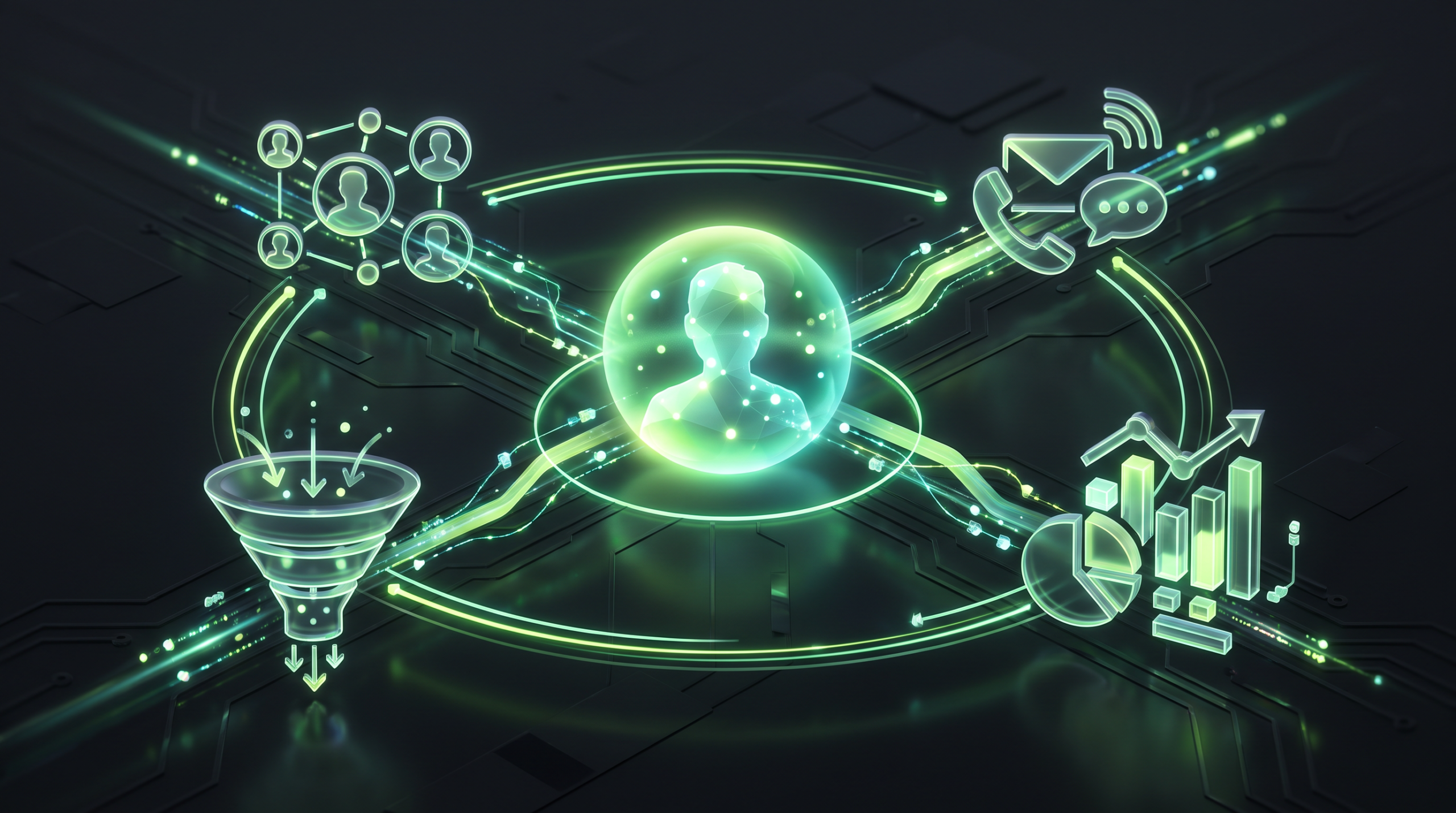
Table of Contents
CRM software is a digital system that manages every interaction your business has with its customers and prospects, uniting sales, marketing, and customer service data in one place. In short, it is a smart memory that remembers who you spoke with, when, about what, and what the next step should be. The numbers explain why it has become essential: according to Salesforce, businesses report an average 29% increase in sales revenue after adopting a CRM, while Grand View Research values the global CRM market at $73.4 billion in 2024, projected to exceed $163 billion by 2030.
In this guide you will learn exactly what CRM software is, the functions it offers, the concrete value it delivers to your business, who should be using it, and what to look for when choosing the right system.
What Is CRM Software?
CRM stands for Customer Relationship Management. A CRM software platform gathers every touchpoint related to your customers — phone calls, emails, quotes, purchases, and support requests — into a single database. Information that would otherwise be scattered across spreadsheets, sticky notes, or individual employees’ memories becomes a shared memory the whole team can access.
Problems like losing a customer’s history when an employee leaves, two sales reps contacting the same lead, or a quote falling through the cracks disappear with a well-built CRM software system. It anchors the relationship to the company, not to individuals.
Core Functions: What Does CRM Software Do?
A modern CRM platform is built on a few interlocking modules:
- Contact and company management: Contact details, history, and notes for every customer, supplier, and prospect live on a single card.
- Opportunity and pipeline management: Each potential sale is tracked through a visual funnel — “first contact → proposal → negotiation → close” — so you instantly see where a deal is stuck.
- Automation: Reminders, follow-up emails, task assignments, and status updates run automatically, freeing your team to focus on selling instead of manual work.
- Reporting and analytics: Revenue forecasts, rep performance, win rates, and churn are monitored on live dashboards.
Combined, these functions let a sales manager answer “will we hit target this month?” with data rather than guesswork.
What Your Business Gains (With Statistics)
The value of CRM software is not abstract; it produces measurable results:
- Higher sales: Salesforce reports an average 29% growth in sales revenue among CRM users.
- Strong ROI: Nucleus Research’s landmark study found that every $1 spent on CRM returns as much as $8.71.
- Better retention: A well-implemented system can improve customer retention rates by up to 27%.
- Time savings: Automation lets reps spend time building relationships instead of entering data, shortening sales cycles.
Given that keeping an existing customer costs far less than acquiring a new one, it is no surprise that a CRM software investment pays for itself quickly. These gains grow further when paired with a well-designed custom software development approach.
Who Should Use CRM Software?
The idea that “CRM software is only for large enterprises” is a myth. In reality, managing relationships correctly from the start becomes critical at every scale as your customer count grows. CRM software is nearly essential for:
- SMEs with an active sales team tracking proposals,
- B2B firms with long sales cycles,
- Marketing teams generating large volumes of leads,
- Businesses handling heavy customer service and support demand,
- Any organization aiming to grow and formalize its processes.
What we have observed across more than 126 clients at Ankara-based Futurecode is clear: businesses that move their processes into a system grow faster and more predictably than their competitors.
How to Choose the Right CRM Software
With dozens of options on the market, choosing the right CRM software is about finding the system that fits your workflow. Keep these criteria in mind:
- Ease of use: An intuitive interface your team will actually adopt. A system nobody uses is a cost, not an investment.
- Adaptability: The flexibility to be tailored to your industry and processes.
- Integration: The ability to connect with your accounting, email, website, and existing tools.
- Reliable support: Accessible technical support and a system that respects local data-protection requirements.
Futurecode CRM was built with exactly these needs in mind: a flexible, scalable solution aligned with how businesses actually work. If an off-the-shelf package feels too rigid, explore the Futurecode CRM product or browse our full range of enterprise software services. With a short setup and the right configuration, CRM software becomes your team’s most reliable working companion.
Frequently Asked Questions
What is the difference between CRM software and Excel?
Excel is a static table; it stores data but does not manage processes. CRM software sends reminders, runs automation, controls team access, and generates reports. As customer numbers grow, Excel simply cannot keep up.
Does a small business need CRM software?
Yes. Even small teams benefit from a CRM to avoid losing proposal follow-ups and customer history. The right system scales as you grow.
How long does a CRM implementation take?
It varies by scope, but a standard configuration can go live within days. Complex, customized projects typically launch within a few weeks.
Is our data secure?
An enterprise CRM keeps your data far safer than loose Excel files, with permissions, backups, and data-protection compliance.
Take Your Customer Relationships to the Next Level
CRM software turns customer relationships from a matter of chance into a measurable, predictable process. To discuss the solution that best fits your business, get in touch with the Futurecode team — we’ll listen to your needs and map out a tailored road ahead together. Curious about the global picture? Explore Grand View Research’s CRM market analysis.