What Is API Integration? A Practical Guide
What is API integration and how do you connect ERP, CRM, accounting and courier systems? REST, webhooks, benefits and challenges in one clear guide.
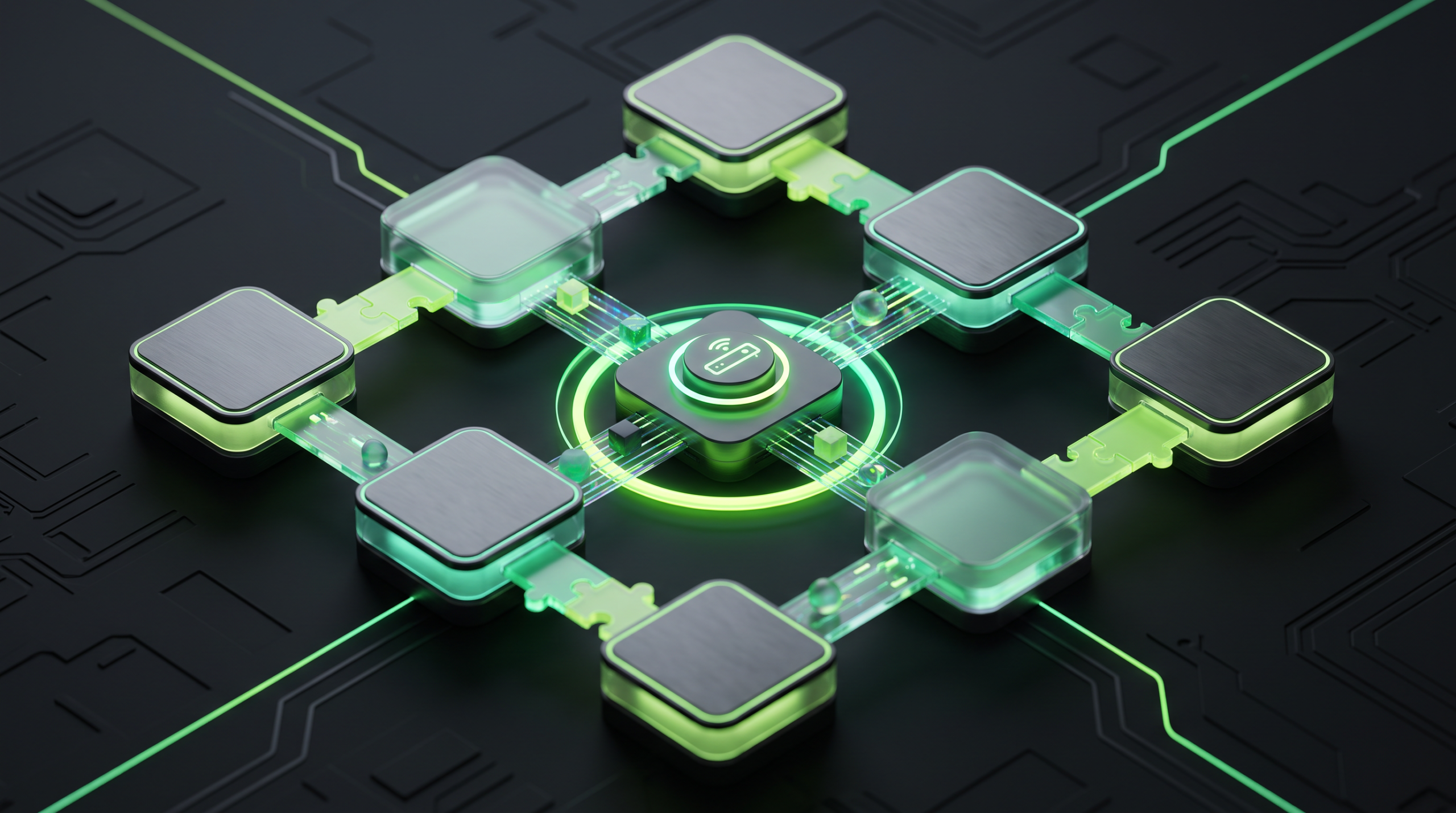
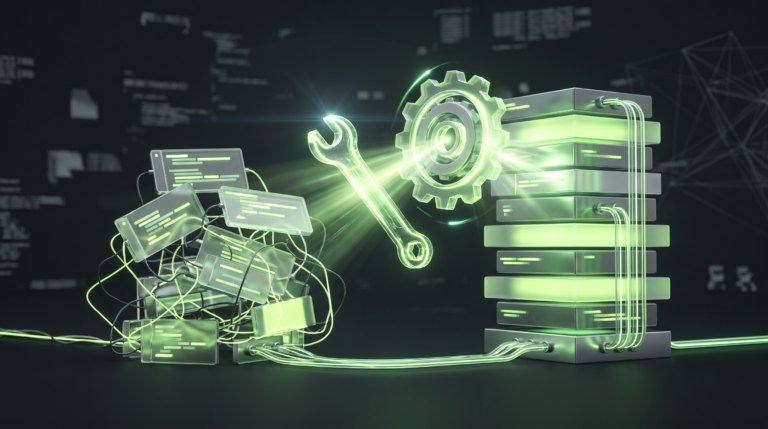
API integration is the method by which two or more software systems talk to each other over a defined set of rules, exchange data, and trigger actions automatically. In short: your ERP, accounting software, e-commerce store, and courier’s system stop being isolated “islands” and start working like a single digital nervous system. The numbers show how critical this is: according to MuleSoft’s 2025 Connectivity Benchmark report, organizations run an average of 897 separate applications, and APIs now account for 40% of company revenue. In this guide we explain, in plain language, what API integration is, which systems it connects and why, and how a solid integration is actually built.
As Futurecode, an Ankara-based enterprise software house, we have delivered custom software and integration solutions for more than 126 companies. We aim to share that hands-on knowledge without drowning it in technical jargon.
What is an API, in brief?
An API (Application Programming Interface) is like the “order menu” a piece of software exposes to the outside world. At a restaurant you don’t walk into the kitchen; you tell the waiter your choice from the menu, and the waiter talks to the kitchen and brings your plate. An API plays exactly that waiter role: it lets one program ask another to “give me this data” or “do this action” without needing to know its internal workings.
For example, an order that lands on your e-commerce site can, within seconds and via APIs, become a stock deduction in the ERP, an invoice record in accounting, and a shipment request at the courier — with nobody copying data by hand.
What does API integration do?
API integration connects systems that would otherwise run in isolation, letting data flow from a single source. The most commonly connected systems and their payoffs:
- ERP ↔ E-commerce: An online order drops into the ERP instantly; stock, price, and status update automatically.
- ERP ↔ Accounting: Invoices, ledgers, and collections stay in sync without double data entry.
- ERP ↔ Courier/Logistics: Shipments are created automatically and tracking numbers flow back to the customer.
- CRM ↔ Marketing: New leads move from a form into the CRM, and from there into email campaigns.
- Bank/Payment ↔ ERP: Collections and statements reconcile automatically, speeding up matching.
The shared benefit in one sentence: manual data entry ends, error rates fall, and decisions rest on real-time data. In multi-system sectors like logistics the impact compounds — our Loggerise Logistics ERP is built on exactly this integration philosophy.
REST and webhooks: core concepts
Most integrations work through two basic approaches. It’s enough to tell them apart simply:
- REST API (you ask, it answers): System A tells system B “send me the current stock list” and gets an immediate response. According to Postman’s 2024 State of the API report, 93% of developers still use REST — it is the industry’s common language.
- Webhook (notify me when something happens): Instead of asking constantly, the system alerts you when an event occurs. For instance, when a payment completes, the courier system is triggered automatically. The same report shows 50% of teams use webhooks.
REST is ideal for “pull information on demand,” webhooks for “event-based instant notification.” A well-designed integration often uses both together.
Benefits and challenges
The biggest gain of API integration is that it breaks down data silos. When data trapped in each department’s own software merges into a single flow, you no longer enter the same information in three places; reports stay consistent; automation kicks in. The scale confirms it: the global API integration platforms market reached $5.72 billion in 2025 and is projected to hit $16.51 billion by 2034, growing 12.5% annually.
But integration isn’t a “plug it in and forget it” job. The main challenges:
- Security: Cross-system data flow poses risks without authentication (tokens, API keys) and encryption.
- Versioning: If the service you connect to updates its API, your integration can break; backward compatibility is essential.
- Rate limits: Most services accept only a set number of requests per minute; overloading can get you blocked.
- Error handling: Retry and logging mechanisms are needed so no data is lost when a connection drops.
How a good integration is built
A robust API integration respects these principles:
- Clear scope: Which data, in which direction, how often — this must be settled first.
- Secure authentication: Token-based access and encrypted connections (HTTPS) are the standard.
- Fault tolerance: Failed requests are queued and retried automatically; no record drops silently.
- Observability: Every flow is logged, so when something breaks you see where in seconds.
- Scalability: The architecture handles 100 orders today and 10,000 tomorrow.
Off-the-shelf connectors work for simple scenarios; but when you have industry-specific business rules, multi-system flows, and custom data transformations, a custom software development approach delivers far safer and more sustainable results. At Futurecode we build end-to-end integrations that connect ERP, CRM, accounting, e-commerce, and courier systems on a turnkey basis. You can explore everything on our services page.
Frequently Asked Questions
Are API integration and web service the same thing?
Not exactly. A web service is a type of API that runs over a network. API is the broader concept; every web service is an API, but not every API is necessarily a web service.
Does a small business need API integration?
If you use more than one program (for example e-commerce + accounting) and enter the same data in two places by hand, then yes. Integration removes that duplication and cuts time and error costs.
How long does integration setup take?
It depends on scope. A simple one-way connection can go live in a few days, while a multi-system architecture with custom business rules may take a few weeks. A clear analysis lets you forecast the timeline upfront.
What happens if the service I connect to changes its API?
Well-designed integrations account for versioning in advance. When a change occurs you get a warning, and compatibility is usually preserved with a small update — which is why a maintenance agreement matters.
Let’s talk about your project
Are your systems not talking to each other, forcing you to enter the same data over and over? Futurecode’s custom software and integration team plans and delivers a connection architecture suited to your enterprise. Get in touch with us and let’s clarify your needs together. For a deeper look, you can also review the MuleSoft 2025 Connectivity Benchmark report.