What Is a Manufacturing Execution System (MES)?
What is MES manufacturing software and how does it differ from ERP? A stats-backed guide to OEE, traceability, Industry 4.0 and IoT.
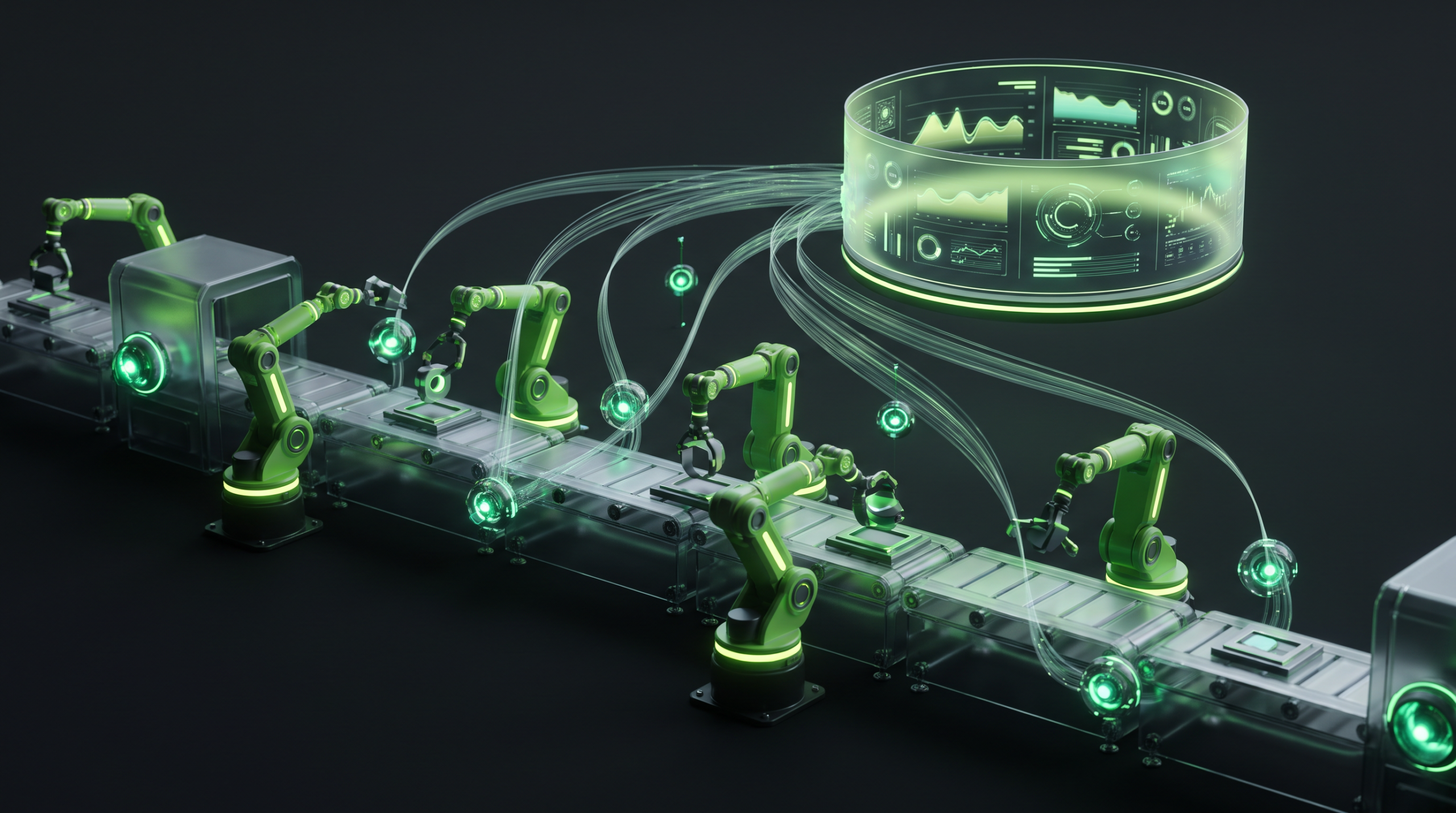
Manufacturing software reaches its most operational form in the MES (Manufacturing Execution System) — a layer that monitors, controls and reports everything happening on the factory floor in real time. The short answer: MES digitizes every production step from the moment an order hits the machine to the moment the finished product enters the warehouse. Its momentum shows in the numbers too: the global MES market was worth roughly US$17.57 billion in 2025 and is projected to reach US$44.67 billion by 2034, growing at a 13.3% CAGR.
As a category of manufacturing software, MES bridges the gap between high-level planning and the physical machine. Instead of chasing answers in spreadsheets, management sees “what did we produce, how much did we scrap, which machine stopped and when?” on live dashboards. This article covers what MES is, how it differs from ERP, its core functions, and its place within Industry 4.0.
What is a Manufacturing Execution System (MES)?
MES is manufacturing software that runs production operations at the work-order level and collects shop-floor data in real time. What job is the operator running, at what speed is the machine going, how many parts passed quality control — all of it is captured instantly. The goal is to eliminate the gap between planned and actual production.
In the traditional method, this data is written on paper at the end of a shift and entered into a table a day later. With MES, data flows automatically from machines and operator terminals, giving managers “what is happening now” instead of “what happened yesterday.” This real-time nature is what separates MES from an ordinary reporting tool.
MES vs. ERP: the real difference
This is the most commonly confused topic. ERP plans and manages enterprise-wide processes — orders, inventory, accounting, procurement — focusing on “what, when, how much.” MES tracks how that plan is physically executed on the floor; it answers “which machine is the job on right now, in what state.”
In short, ERP decides from the top, MES runs the floor. When integrated, ERP order data drops straight to the shop floor, and real production data flows straight back to ERP. A modern manufacturing software strategy connects these two layers seamlessly; otherwise, a constant data disconnect appears between plan and reality.
Core functions of MES
The value an MES brings to a plant materializes in these core functions:
- Production monitoring: Real-time tracking of work orders and the live status of each production step.
- OEE measurement: Live calculation of equipment effectiveness (availability × performance × quality). In discrete manufacturing, average OEE typically sits between 55–70%, while world-class is 85% — meaning most plants hold significant improvement potential.
- Quality management: Instant monitoring of defect and reject rates, feeding root-cause analysis.
- Traceability: Which raw material, in which batch, went into which product — full backward tracking (critical in food, pharma and automotive).
- Maintenance management: Logging downtime, triggering planned and predictive maintenance.
Industry 4.0 and IoT connection
MES is the data backbone of Industry 4.0. IoT sensors mounted on machines generate data on temperature, vibration and cycle time every second; MES turns this raw data into meaningful production metrics. Today around 58% of manufacturers worldwide have adopted some form of Industry 4.0 technology, yet only 10% are considered fully digitized — the competitive edge still belongs to early movers.
Add an AI layer and MES no longer just monitors — it predicts: catching a machine’s failure signals before breakdown, flagging a line bottleneck in advance. Futurecode’s AI solutions make this step possible by turning MES data into predictive-maintenance and smart-planning models.
Benefits and how to implement
A well-built MES delivers measurable gains: higher productivity, lower scrap, the end of paperwork, and real-time decision-making. It is common for businesses to achieve double-digit OEE improvements within months of an MES rollout.
The implementation journey usually follows these steps: analyzing current processes, setting up data collection on critical machines, ERP integration, deploying operator terminals, and scaling from a pilot line to the whole plant. Because every plant’s process map differs, a custom software development approach often produces sharper results than an off-the-shelf package. As Futurecode, within the services we deliver from Ankara to 126+ clients, we design manufacturing software that fits your real process.
Frequently Asked Questions
Are MES and ERP the same thing?
No. ERP plans the enterprise (orders, inventory, accounting); MES manages, in real time, how that plan is executed on the factory floor. They complement each other and work best when integrated.
Does MES make sense for a small factory?
Yes. Regardless of scale, even a modular manufacturing software starting from a few critical machines pays back quickly by providing scrap and downtime visibility.
How long does an MES rollout take?
It depends on scope; a single-line pilot can go live in a few weeks, while a full multi-line rollout may extend to several months. Moving modularly and in phases is the safest path.
Will it work with my existing machines?
Usually yes. Even legacy machines can be connected to MES with add-on IoT sensors and data-collection units; replacing equipment from scratch is not required.
Let’s talk about your project
If you want to see and manage your plant’s productivity in real time, we can design an MES solution built for you. Get in touch with Futurecode; let us listen to your process and map out the right manufacturing software roadmap together. For a deeper look at the shift to Industry 4.0, Grand View Research’s MES market analysis is a solid starting point.