Digital Transformation in Logistics: The Future of Software Technologies and the Competitive Advantages They Deliver
Digitalize your logistics processes with Futurecode technology. Discover how Loggerise, our AI-powered logistics software, helps you cut costs, gain real-time visibility, and build a lasting competitive edge.
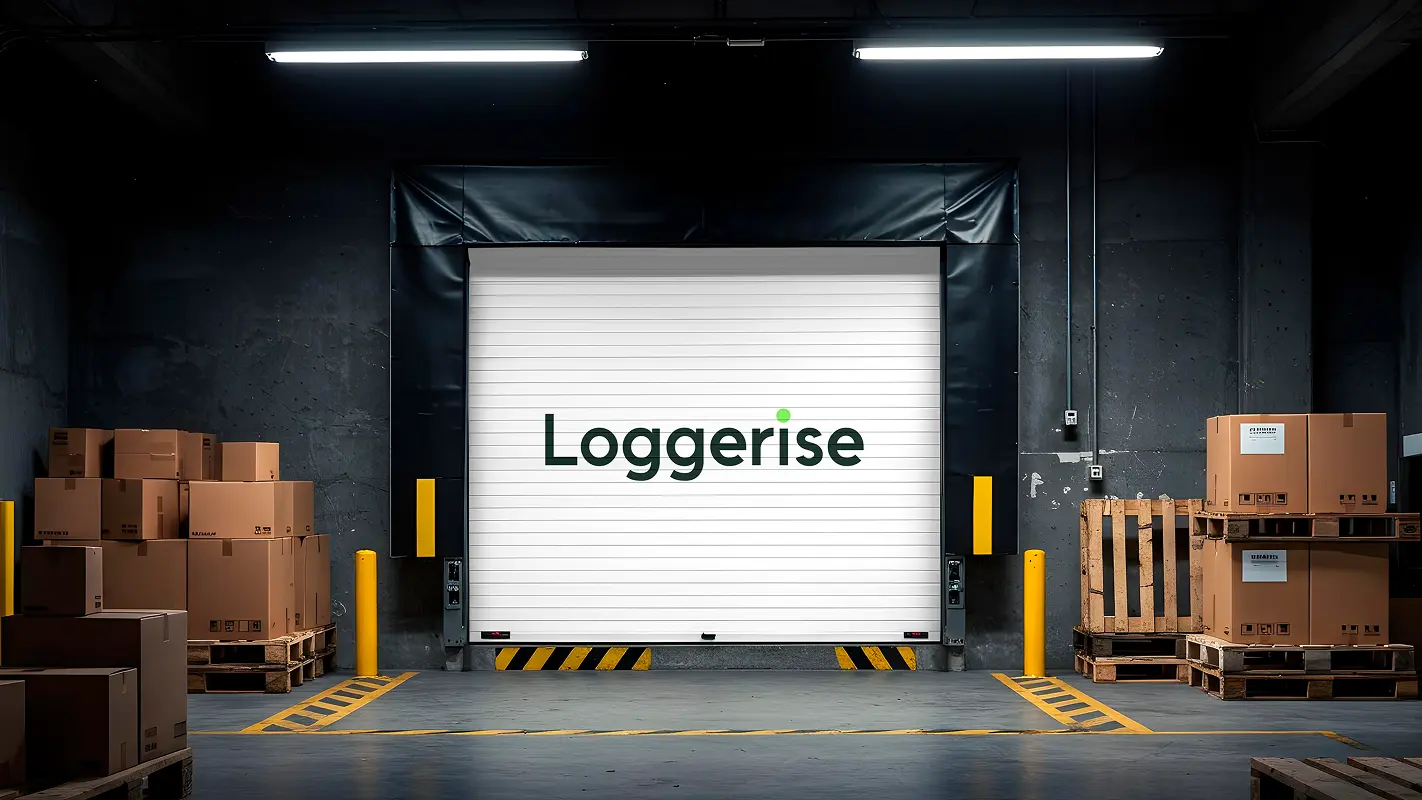
Over the past decade, digital transformation has gone from being the business world’s most overused “buzzword” to becoming a survival guide for companies. Especially with the Industry 4.0 revolution, the links of the supply chain — from production all the way to the end consumer — have evolved toward data-driven management and automation. As a software company (Futurecode), the most important trend we observe is this: technology is no longer an element that “supports” business processes; it has become the business process “itself.”
Logistics leads the list of industries where this transformation is unfolding at its harshest and fastest. Logistics networks — the arteries of global trade — can no longer carry the weight of sluggish manual methods. In this article, we take an in-depth look at how software technologies are redefining logistics operations, the rise of cloud-based (SaaS) architectures, and the engineering approach behind Loggerise, a product of our vision at Futurecode in this field.
1. From Traditional Logistics to “Smart Logistics”
Historically, logistics was defined as “moving goods from point A to point B.” From a 2024 perspective, however, that definition falls short. Logistics is now the management of information, time, cost, and customer experience.
Traditional methods (Excel spreadsheets, endless phone calls, paper-based delivery notes) cannot meet the demands of today’s “Speed Economy.” Manual processes bring “data silos” with them. A structure in which the transportation team has no view of warehouse stock, and customer service has no idea of shipment status, is simply not sustainable for a business.
The Role of Software: Making the Invisible Visible
There is a fundamental principle in software engineering: “You cannot process data you cannot measure.” Modern logistics software leaves digital footprints at every step of the operation.
-
Data begins the moment the vehicle’s ignition is switched on.
-
Data is updated when loading takes place.
-
Data is finalized at the moment of delivery.
This continuous flow of data gives businesses “Real-Time Visibility.” In every system we develop at Futurecode, our priority is always the integrity and usability of data.
2. The Power of Cloud-Native Architectures in Logistics
The software world has undergone a radical shift from on-premise systems to cloud-based SaaS solutions. For a sector as dynamic, always-on, and location-independent as logistics, cloud technology is not a preference — it is a necessity.
Why Cloud-Based Logistics Software?
-
Accessibility: The logistics manager is in the office, the warehouse supervisor is on the floor, and the driver is on the road. Cloud architecture provides access to the system from anywhere with an internet connection.
-
Scalability: During peak e-commerce periods such as Black Friday, system traffic can increase tenfold. Cloud infrastructures expand automatically (auto-scaling) to handle this load.
-
Ease of Integration (API-First Approach): Modern software is built on the “API-first” principle, meaning every function of the system can talk to other software. Thanks to API architecture, integrating a logistics platform with SAP, Logo, or an e-commerce site (Shopify, WooCommerce) takes minutes.
As the Futurecode engineering team, we use microservice architecture in the solutions we develop, keeping the system modular, fast, and fault-tolerant.
3. Artificial Intelligence and Algorithmic Route Planning
The greatest added value software creates in logistics is undoubtedly in the field of “optimization.” Mathematics has a notoriously complex challenge known as the “Traveling Salesman Problem” (TSP): “How does a salesman visit every city on his list via the shortest route and return to his starting point?”
The human mind can work this out for 5 stops. But when 50 vehicles and 500 delivery points are involved, billions of possibilities emerge. This is where Artificial Intelligence (AI) and Machine Learning (ML) come into play.
The Power of Algorithms
Advanced logistics software (here we are referring to the technologies we develop at Futurecode) accounts not only for distance but also for traffic density, vehicle capacity, delivery windows, and driver rest times.
These algorithms offer businesses:
-
Fuel Savings of Up to 20%: Eliminating unnecessary mileage.
-
Reduced Carbon Footprint: Alignment with sustainability goals.
-
Resource Efficiency: The capacity to do more work with fewer vehicles.
4. Mobility and Field Management: Bringing the Driver into the System
Software is not just for the planner in the office. Drivers — the most important actors in the field — must also be part of the digital transformation. The mobile applications we develop at Futurecode turn drivers’ smartphones into logistics terminals.
Thanks to mobile integration:
-
Paperless Delivery: Delivery notes and delivery forms go digital.
-
Digital Proof of Delivery (POD): A photo taken or a digital signature captured at the moment of delivery reaches headquarters within seconds.
-
Navigation Integration: The driver never has to think about the next stop; the app guides them along the optimal route.
This integration puts an end to “field blindness.” The operations manager knows in real time which vehicle is where and why a delivery is running late.
5. The Futurecode Vision and Loggerise: An Engineering Achievement
At Futurecode, we have been developing custom software solutions for different industries for years. When we recognized the deep gap and unmet need in the logistics sector, however, we decided to build a product for this field to global standards. The result of that vision is Loggerise.
Loggerise is an end-to-end Logistics ERP solution that combines Futurecode’s expertise in software architecture with the practical needs of the logistics industry.
Why Did We Build Loggerise?
Most off-the-shelf packages on the market were either too expensive and cumbersome, or too simplistic and inadequate. With Futurecode engineering, we set out to achieve the following:
-
User Experience (UX): Managing complex logistics processes through interfaces simple enough for anyone to use.
-
Intelligent Decision Support: A smart system that does more than keep records — one that can tell managers, “You would be more profitable if you did it this way.”
-
Flexibility: A modular structure that works equally well for an SME in Türkiye and a global logistics giant.
Today, Loggerise stands as the most tangible proof of Futurecode’s “SaaS Product Development” capability. The route optimization algorithms and dynamic warehouse management modules built by our in-house R&D team significantly reduce businesses’ operational costs.
6. Data Security and Data Protection Compliance (KVKK)
In a digitalized world, data is more valuable than oil. Yet protecting that data is every bit as critical. When it comes to customer addresses, phone numbers, and trade secrets, there is no room for compromise on security.
As with every piece of software we develop at Futurecode, we apply the highest level of security protocols across the Loggerise infrastructure as well.
-
End-to-End Encryption: Your data is encrypted both in transit and at rest.
-
Regular Backups and Disaster Recovery: Your data is backed up on servers in different locations to guard against potential disaster scenarios.
-
Access Management: Advanced logging mechanisms that track who signs in to the system, when, and from which device.
Software quality is measured not only by how fast the code runs, but also by how securely it stores your data.
7. Return on Investment (ROI) and Future Outlook
For a business, software investment is not an expense item — it is a strategic asset. A well-designed logistics software solution pays for itself in a short time (typically 6-12 months) through the efficiency gains and cost savings it delivers.
In the future, logistics will grow even more complex with autonomous vehicles, drone deliveries, and blockchain-based smart contracts. The way to be ready for that future today is to have a flexible, extensible software infrastructure. At Futurecode, we prepare our clients not merely to solve today’s problems, but to lead tomorrow’s technology.
Conclusion: Choose the Right Technology Partner
Digital transformation is not a one-off project; it is an ongoing journey. What businesses need on this journey is not simply to buy a “program,” but to work with a visionary “technology partner.”
With its custom software projects and industry-specific products such as Loggerise, Futurecode continues to strengthen the digital muscles of businesses. If you want to modernize your logistics processes, break free from manual workloads, and move to data-driven management, our engineering power is at your side.
To explore the next-generation logistics platform built by the Futurecode team and learn more, visit the Loggerise website.