E-Commerce Software: A 2026 Guide for Businesses
What is e-commerce software, and should you pick a ready-made platform or custom build? Explore enterprise features, ERP integration, security, and selection criteria.
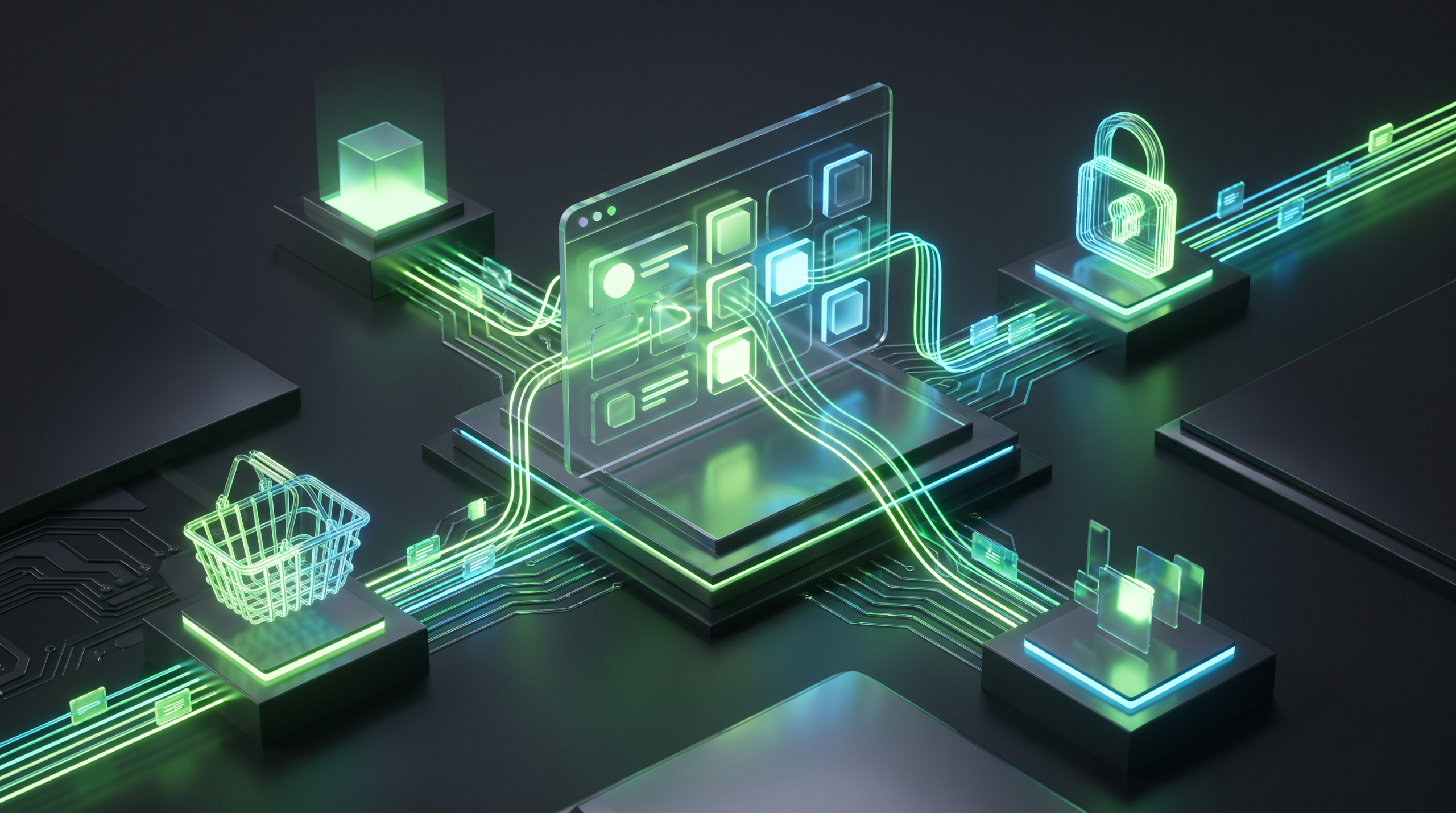
Table of Contents
E-commerce software is the digital infrastructure that lets a business sell products and services online, unifying catalog management, payment processing, order and inventory tracking, and customer management under a single roof. For enterprise sales, the right e-commerce software is far more than a hosted shop: it is a scalable, compliant commerce engine that integrates with your ERP, shipping, accounting, and marketplace systems. The scale is enormous — global retail e-commerce sales reached an estimated $6.4 trillion in 2025, while Turkey’s e-commerce volume grew 52.2% year over year to 4.57 trillion TL. For companies that want to stand out in this growth, sales infrastructure is no longer a nice-to-have; it sits at the center of competition.
In this guide we explain what e-commerce software is, how a ready-made platform differs from custom software, the core features an enterprise store must have, and the criteria to make the right choice. As Ankara-based Futurecode, we turn the experience gained from more than 126 corporate clients into measurable results for your sales goals.
What is e-commerce software?
E-commerce software is the system that enables a business to showcase products online, receive orders, collect payments securely, and manage the entire process in the background. What separates it from a simple showcase website is that it covers the full operational chain of a sale: the customer views a product, adds it to the cart, and pays; the system then deducts stock, generates the shipping label, and passes the invoice to accounting.
Enterprise e-commerce software typically consists of these components:
- Storefront: The shopping interface customers see, search, and filter.
- Admin panel: The back end for managing products, prices, campaigns, and orders.
- Payment layer: The secure tier that processes virtual POS, wallets, and installment options.
- Integration layer: The APIs that exchange data with ERP, shipping, accounting, and marketplaces.
Well-architected e-commerce software does not multiply manual workload as sales volume grows; by automating processes, it makes growth sustainable.
Ready-made platform vs custom e-commerce software
Businesses usually choose between two paths: ready-made SaaS platforms such as Shopify or Ticimax, or e-commerce software built specifically for the business. The right decision depends on operational complexity and growth ambition.
Ready-made platforms offer a fast start; the subscription model keeps setup costs low and standard features come out of the box. However, customization is limited, transaction commissions rise as revenue grows, and you may hit walls with complex ERP integrations and B2B pricing scenarios. Your data lives on the provider’s infrastructure.
Custom e-commerce software, by contrast, aligns exactly with your business processes. Customer-specific B2B price lists, current-account integration, corporate approval flows, and seamless data flow with your existing ERP all become possible. The upfront investment is higher, but there is no long-term commission dependency and the software is entirely yours. For enterprise-scale businesses with complex catalogs or multi-channel sales, custom software development is often the more sustainable choice.
A practical approach: an early-stage brand selling standard products can validate with a ready-made platform, while a scaling company with unique processes will see custom software pay for itself quickly.
Must-have features in enterprise e-commerce software
An enterprise e-commerce project should include these core capabilities without exception:
- Advanced catalog management: Category trees, variants (color/size), bulk product updates, and search-friendly product pages.
- Secure payments: Multiple virtual POS, installments, one-click checkout, and 3D Secure support.
- ERP and accounting integration: Two-way sync of stock, price, and invoice data, so an order flows to accounting the moment it is placed.
- Shipping integration: Automatic shipment creation, tracking numbers, and delivery status updates.
- Omnichannel sales: Managing website, mobile, and marketplaces from a single panel.
- Analytics and reporting: Data-driven decisions with conversion rate, cart abandonment analysis, and sales reports.
When these features work together, e-commerce software becomes not just a selling website but the operational backbone of the business. At Futurecode, with products such as Loggerise (logistics ERP) and Futurecode CRM, we connect your e-commerce sales channel end to end with your back-office processes.
Selection criteria, security and data compliance
When choosing the right e-commerce software, evaluate these criteria:
- Scalability: Can it handle surging traffic on campaign days without downtime?
- Integration flexibility: Can it talk to your existing ERP, accounting, and shipping systems via API?
- Security and data compliance: Does it provide SSL, PCI-DSS compliant payments, data encryption, and lawful personal-data processing (GDPR/KVKK)?
- Total cost of ownership: What is the long-term sum of subscription, commission, maintenance, and development costs?
- Technical support: Is there a team that knows your processes and is reachable the moment an issue arises?
Security is non-negotiable. Any e-commerce software that processes customer data requires compliant consent management, secure server infrastructure, and regular security testing. On an enterprise site, payment security and data protection directly affect brand reputation. With a strong corporate web design, this security infrastructure must be delivered without compromising the user experience.
Frequently Asked Questions
What is the difference between e-commerce software and selling on a marketplace?
When you sell on a marketplace (such as Trendyol), your brand is bound by the platform’s rules and commissions, and customer data largely stays on the platform. With your own e-commerce software, your brand, customer relationships, and data are entirely yours. The healthiest setup is an omnichannel model that manages both from a single panel.
How long does a custom e-commerce software project take?
It depends on scope. A standard enterprise store can go live in a few weeks, while projects with complex ERP integrations and B2B scenarios may extend to a few months. At Futurecode, we provide a clear roadmap and timeline after a needs analysis.
How is e-commerce software made compliant with data protection law?
You need an explicit consent mechanism for processing personal data, disclosure texts, data encryption, secure storage, and deletion processes when required. A PCI-DSS compliant payment layer and an SSL certificate on the site are also fundamental requirements.
Can I integrate e-commerce software with my existing ERP?
Yes. Well-designed e-commerce software synchronizes stock, price, order, and invoice data two-way with your ERP through an API layer. With its logistics and enterprise process experience, Futurecode builds these integrations end to end.
Build your e-commerce project with Futurecode
In enterprise sales, competition is won with the right infrastructure. Ankara-based Futurecode develops tailored, scalable, and compliant e-commerce software through its custom software, artificial intelligence, mobile application, and corporate web services. Let’s analyze your needs together, design the right architecture, and build a system that reaches your sales goals. Explore all our offerings on our services page, or get in touch to discuss your project. For up-to-date figures on global e-commerce, follow authoritative sources such as Statista.