
Why UX/UI Design Matters in Enterprise Software
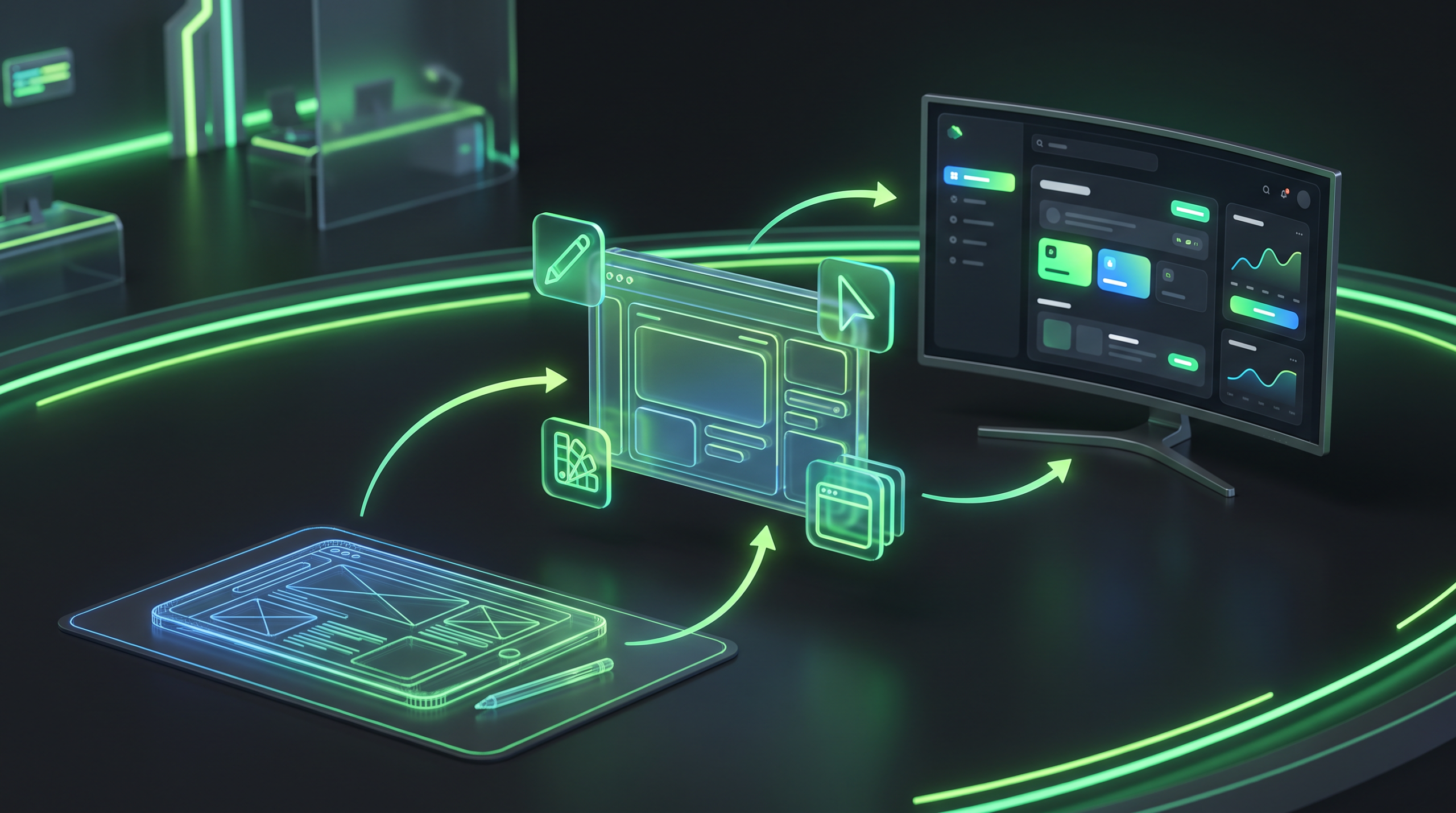
User experience is one of the most decisive factors behind the success of any enterprise software. The numbers make it clear: according to Forrester research, every $1 invested in user experience can return up to $100 when done right. In other words, good design is not a cost — it is a measurable investment. The more intuitive an enterprise application feels, the faster employees adopt it, the fewer errors they make, and the more productive they become.
At Futurecode, an Ankara-based software house, we place design at the center of every corporate web, mobile, and custom software project. In this article we examine the difference between UX and UI, the business cost of poor design, the principles behind good design, and how a professional design process actually works — all grounded in evidence.
The Difference Between UX and UI
UX (User Experience) and UI (User Interface) are often confused, but they are distinct disciplines. UX covers the entire relationship a person has with a piece of software: the flow logic, the information architecture, how many steps it takes to finish a task, and whether the user ever feels lost. UI is the visual layer on top of that: colors, typography, buttons, icons, and spacing.
A simple analogy: UX is the floor plan of a building — where the rooms are and where the hallways lead. UI is the wall color, furniture, and lighting. A beautiful interface cannot rescue a broken flow; no one enjoys getting lost on an aesthetically pleasing screen. Real success comes only when both are designed together.
The Real Cost of Bad Design
Bad design loses money quietly. In McKinsey’s Design Index study, which tracked 300 publicly listed companies over five years, top-quartile design performers achieved 32% higher revenue growth and 56% higher total returns to shareholders than their peers. Companies that took design seriously grew about 10% annually, while others stayed in the 3–6% range.
In enterprise software, the cost cuts both ways. Externally, poor experiences drive customers away. Internally, an unadopted system wastes employee time, generates support tickets, and pushes people toward shadow processes — retreating to spreadsheets instead. A convoluted ERP or CRM screen steals minutes from every worker’s day; multiplied across hundreds of users, those minutes become a serious hidden cost. Software that is not adopted means most of the investment behind it is thrown away.
Principles of Good User Experience
A strong user experience is not luck — it is the product of disciplined principles. In enterprise projects, these fundamentals stand out:
- Usability: A user should complete a task on the first try, without reading a manual. Fewer clicks, clear labels, predictable behavior.
- Consistency: The same action should work the same way on every screen. Buttons, terms, and flows must be standardized across the system.
- Accessibility: Adequate color contrast, keyboard navigation, and screen-reader compatibility — essential for both legal compliance and inclusion.
- Feedback: Every action needs a response — a loading state, a success message, a clear error explanation.
- Error prevention: Design that keeps users from making mistakes beats design that only warns them afterward.
- Reduced cognitive load: Show only what is needed on screen; hide complexity, surface priorities.
The Design Process: From Research to Testing
A professional design process moves through four main stages, and each one tests the assumptions of the last:
- Research: Interviews with real users, analysis of existing workflows, clarification of needs. Design starts here — not on a screen mockup.
- Wireframing: Plain, colorless skeletons map out flow and layout. The goal is to validate logic without getting distracted by visuals.
- Prototyping: A clickable, near-real model. Ideas become tangible before a single line of code is written.
- Testing: Users attempt real tasks with the prototype. Nielsen Norman Group’s foundational research shows that testing with just 5 users uncovers about 85% of a product’s usability problems — so early testing reduces major risk at low cost.
This loop is not a one-time event; findings from testing feed back into research and repeat until the design matures.
Unique Challenges in Enterprise Software
Designing enterprise software brings challenges that consumer apps do not face. Users do not choose the software — the organization assigns it — so adoption is not voluntary, and a poor experience hits productivity directly. Processes are complex: forms with hundreds of fields, multi-step approval flows, different permissions for different roles. On top of that, integration with legacy systems, dense data tables, and regulatory requirements all constrain the design.
At Futurecode we overcome these challenges with interfaces that are compact yet breathable, role-based simplification, and patterns that never slow the power user down — keyboard shortcuts, bulk actions, and more. We carry the operational experience gained from our own products, such as Loggerise, into our corporate web design and mobile app development projects. The goal is always the same: software that makes the user’s job easier, gets adopted, and returns the investment.
Frequently Asked Questions
Are UX and UI the same thing?
No. UX covers the entire experience a user has (flow, logic, ease of use), while UI is the visual interface layer on top of it. The two must be designed together.
What is the concrete business benefit of good design?
Higher adoption, lower support costs, fewer errors, and faster tasks. Research shows UX investment can return up to $100 for every $1 spent.
How many people are enough for user testing?
According to Nielsen Norman Group, just 5 users reveal roughly 85% of usability problems. Early, small-scale testing is one of the most cost-effective steps you can take.
Can the design of our existing enterprise software be improved?
Yes. With user research and a usability audit, existing systems can be significantly improved without a full rewrite.
Let’s Talk About Your Project
If you want to take your enterprise software’s user experience to the next level, Futurecode’s design-driven team is ready. Explore our services or get in touch directly, and let’s plan the right web, mobile, or custom software solution together. If you want to dig deeper into the topic, the Nielsen Norman Group library is an excellent starting point.